
How to improve drinking water accessibility in the workplace
When businesses talk about making an office accessible, the conversation usually starts at the front door. Is there a ramp? Does the lift work? Is there an accessible toilet on every floor? Those are the right questions, and a surprising number of buildings still fall short on them. But they’re mostly about getting people into the building. What happens once they’re inside gets far less attention.
Take the office kitchen. Most of us wander over to it four or five times a day without a second thought. For a colleague who uses a wheelchair, or has sight loss, or whose hands don’t grip the way they used to, the same trip can take a bit of planning, and sometimes means asking for help with something as ordinary as filling a mug.
The bit of the building nobody checks
The Equality Act 2010 requires employers to make reasonable adjustments so disabled employees aren’t at a disadvantage compared with everyone else. Most HR teams know this well. In our experience, though, the tea point rarely comes up when a building is reviewed for access. It gets treated as a fitting rather than a facility.
Look at what a standard set-up asks of the person using it. The tap is usually mounted towards the back of the worktop, so you have to lean in to reach it. Hot and cold are often told apart by a small light or an icon on the tap body. And you’re dealing with water at or near boiling point, which means holding a cup steady while you pour.
None of that is a problem if you’re standing, have good eyesight and steady hands, but take away any one of those and it gets much harder. For someone living with dementia, a small LED may not register as a warning at all, which is a real safety concern where boiling water is involved.
Better design here also helps far more people than those with a diagnosed disability: the colleague with a broken wrist, the visitor who doesn’t know the kitchen, the person who’s six months pregnant and can’t lean over a deep counter.
Ask before you buy anything
The simplest place to start is to go and stand in your own kitchen for ten minutes and watch how people use it. People with accessibility needs are often very good at quietly working around a problem, and they may not have mentioned it because they didn’t want to be a nuisance.
Things to look out for:
- whether a wheelchair user can actually get close to the tap, or whether a bin, cupboard door or fridge is in the way
- whether hot and cold can be told apart without relying on a light
- anything that needs a strong grip, a twist, or two hands
- clutter (delivery boxes have a habit of ending up in front of the refill point)
Some of what you find can be sorted the same day. Although other things are better dealt with during a refurb or fit-out, so get accessibility on the agenda at design stage, while the controls can still go wherever they need to.
What we offer for different users
Billi first started adapting its products back under the Disability Discrimination Act 1995, and we’ve carried that on under the Equality Act. Different people need different things from a tap, so rather than one “accessible model” we have a few speciality options.
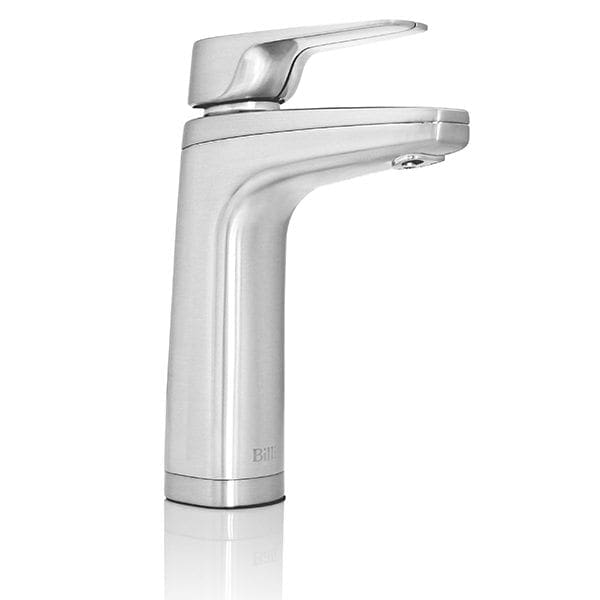
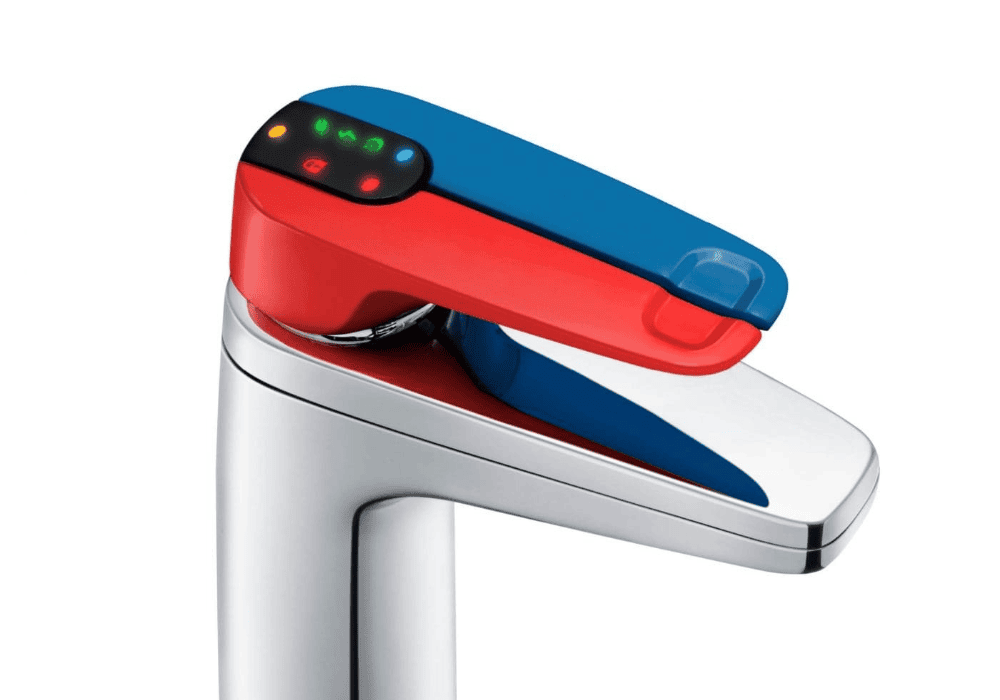
The coloured XL levered dispenser was designed with vision impairment and dementia in mind. Instead of relying on an LED to show which mode you’re in, it has a red lever and a blue lever, so hot and cold are easy to tell apart even where a light can’t be seen. Levers are also a lot kinder to people with limited dexterity than small push buttons.
For blind and partially sighted users, that dispenser can be supplied with Braille pads, giving a tactile check before anyone pours.
Then there’s the XR Remote, aimed more at wheelchair users. Here the issue is usually reach rather than visibility, so the XR Remote moves the controls off the dispenser altogether. The operating panel can be fitted wherever suits the people using it, and the dispenser goes wherever it needs to go. It has hot water safety built in and a remote LED display showing mode and status, it dispenses both hot and cold water, and it works for both seated and standing users.
One more thing that helps at design stage: our under-counter units are water-cooled rather than fan-cooled, so there’s no need to cut ventilation grilles into the cupboard. That’s one less constraint when you’re planning the layout.
Keeping it accessible
An accessible tap that’s broken, or hidden behind a stack of boxes, may as well not be there. Add the water point to your regular facilities checks and keep it on a service plan so filters get changed and faults are caught early. Our customer care plans and UK-wide service team are set up for exactly that.
If someone has asked for adjustments, show them the XR Remote panel or the Braille pads rather than assuming they’ll find them, and mention it when new starters are shown round.
The kettle test
If you want one quick way to gauge how accessible your workplace really is, try this: could everyone in the building make themselves a hot drink, safely, without having to ask for help? If you’re not sure, the tea point is a sensible place to begin.
Our team are always happy to talk through the options for your workplace or project.